Choose a story below. You can send it once, or as a gift that arrives each month.
Every option is a one-time gift, never a recurring charge.

Intrigue, atmosphere, and a mystery that slowly reveals itself, one elegant clue at a time.

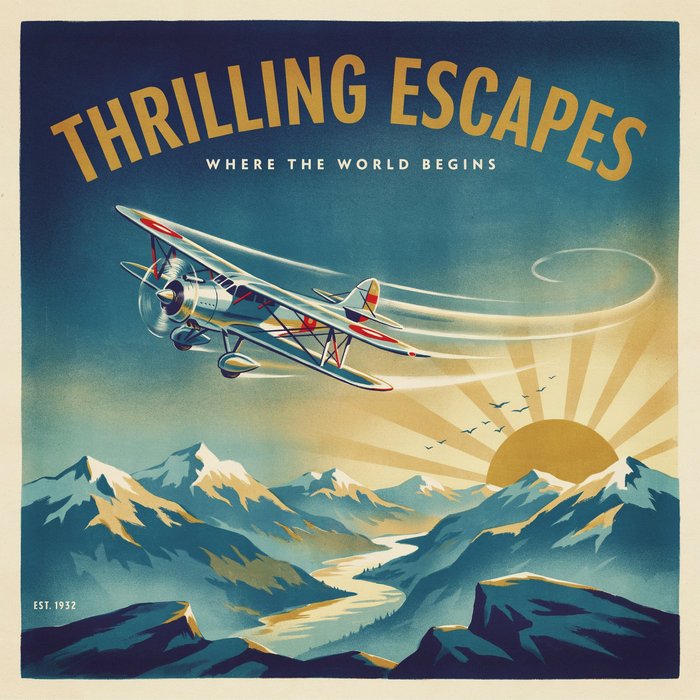
High stakes, fast turns, and a story that never lets you catch your breath.

Another era comes alive as your recipient steps into a world of discovery and consequence.

Quiet moments, genuine connection, and a story that stays with you long after the last line.

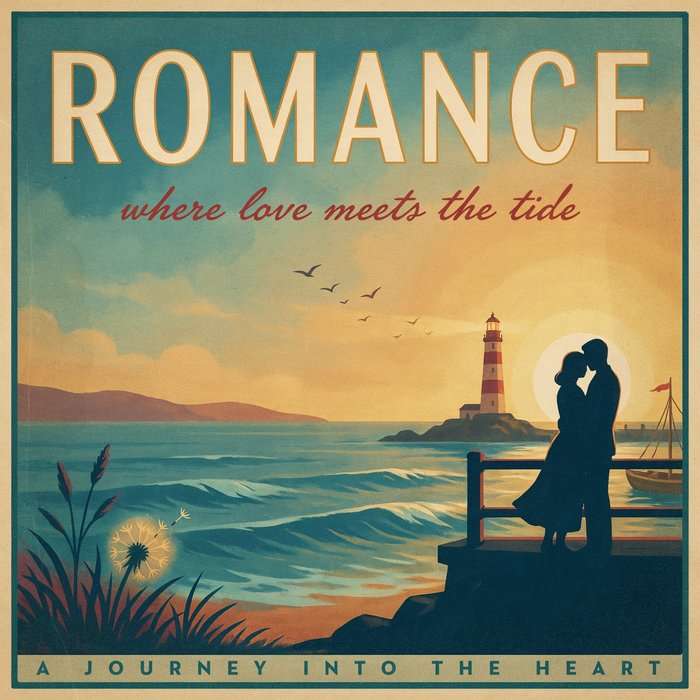
Sun-warmed coastlines, stolen glances, and a love story written just for them.
Crafted as a single gift
Sweeping landscapes, bold choices, and a journey that changes everything.
Crafted as a single giftThe dining room of the Flamingo Club smelled, as it always did on luncheon days, of gardenias and mild social anxiety. The gardenias came from three enormous arrangements near the windows. The anxiety came from everywhere else.
Bonnie had been a member for eleven years, long enough to know which tables carried status and which carried drafts from the kitchen. She had a table near the east window, a cup of consommé she hadn’t touched yet, and an unobstructed view of practically everything.
Victoria Amarante Carrington’s bracelet, the one the society columns had described as descended from Austrian nobility, was no longer on Victoria’s wrist. It had been there during the welcome remarks. Bonnie was certain of it. Now Victoria’s wrist was bare, and Victoria herself was very carefully not looking at it.
Across the room, you notice two things at once. Which catches your eye first?
The flight from Washington was the long kind, the kind with a meal in the middle and a second one threatened later, and somewhere over the dark water it had reached the hour when the cabin lights go down and everyone privately negotiates with sleep. Daniel did not sleep on planes. Instead he had spent the past three patient hours developing a thorough and well-evidenced opinion about the man in seat 14C.
14C had ordered a water and not touched it. He had not slept, had not opened his screen, and kept one foot pressed against the soft leather bag under the seat ahead of him, the way you keep a hand on a sleeping child in a moving car.
Another man, three rows up, rose for the lavatory, and as he drew level with 14C his phone was already in his hand, low against his hip, angled. It was not the angle of a man reading a message. It was the angle of a phone held to catch what was in front of it, and what was in front of it was the back of 14C’s head.
What do you do?
The survey schooner Perseverance had been named, its captain liked to say, for a virtue rather than an expectation, which was the honest way to name a boat. To Eleanor, standing on its deck for the first time on a gray Astoria morning with a satchel over one shoulder, it looked like exactly the kind of small, serious, unglamorous vessel a person might board in order to be somewhere other than where they had been. Which was, as it happened, the entire reason Eleanor had come.
Aldous Vane was the finest coastal cartographer on the western seaboard, and he was aware of this in the way that people are aware of facts they have stopped needing to verify. The position of assistant had gone to Eleanor not as Vane’s first choice, his second choice, or, if he was being precise about it, any choice he had been consulted about.
The work settled into a rhythm of soundings and angles, and Eleanor was good at it. Which was why the sketch caught her eye. An inlet, drawn carefully in his private notebook, detailed and complete, except that the official coastal profile for that same stretch showed solid cliff. Two miles of sheltered water on one page. A wall of rock on the other. When she mentioned it, his hand paused for just a fraction of a second before he took the rule from her.
The notebook is open. The sketch is there, and it doesn’t match the official chart. Vane has gone back to his instruments. What do you do?
Henry had lived on Calder Street for nine years, long enough to know that nothing of consequence ever arrived before ten in the morning, which was precisely why the doorbell at eight forty-three on a Saturday felt less like a sound than an accusation.
He opened the door to a young man holding a cake. It was not a modest cake. It was three tiers of pale buttercream the color of good stationery, finished with a ribbon of deeper gold, and across the front, in a confident hand that had clearly been paid for, it said: Happy 50th, You Old Liar.
Henry looked at the cake. The cake, in its way, looked back. “This is fourteen Calder Street,” he said, “but this cake is not mine.” But the young man’s van was already pulling away from the curb. So now Henry had a cake.
The cake is on your counter and the morning is going. Where do you start?
The town of Caddwick Point had the particular quality of a place that had recently decided to take a rest. The ice cream shop was shuttered. The kayak rental had a hand-lettered sign in the window that said BACK IN MAY, as though May were a person expected shortly. Claire had driven up from Boston in just under three hours, which was about two hours and fifty minutes longer than she had needed to think about what she intended to do.
The letter had arrived on a Tuesday. Handwritten, a pale gray card inside a plain envelope, no return address. Four sentences. There are things that should have reached you a long time ago. They didn’t, and that was my fault, not yours. I’ve left what I can at Caddwick Point. I think you’ll understand when you get there. Signed, simply: Marisol.
The note at the inn had sent her to the lighthouse, and the envelope was waiting exactly where it said it would be. She was still holding it, unopened, when she realized she wasn’t alone. A man sat on the flat rocks nearby, a sketchbook open on his knee. Not waiting, exactly. But not surprised by her either.
You’re holding an envelope you haven’t opened yet, and you’re no longer alone. What do you do?
James had been in Monaco for eighteen hours and had already formed an opinion, which was that the place was exactly what it appeared to be, and that this was the most unsettling thing a place could be.
A great-aunt had left him a trip in her will, and James had accepted it without examining it too closely. Sun. Coast. A week of nothing required of him. The envelope at the front desk had not been part of the plan. It had been left, the clerk explained, by a woman who had checked out that morning, paid in cash, and instructed that it go to the next guest under the reservation.
James opened it standing in the lobby. Inside was a single card, three lines in a hurried, slightly slanted hand. The Rossetti letter is real. It’s been found. Someone else knows. Take the 11:42 to Ventimiglia. Change for the Cinque Terre. I’ll find you. — C He took the 11:42. Two seats ahead, a woman who had boarded at the last moment watched the coast with the concentrated attention of someone thinking rather than sightseeing. She turned once. Then the train went into a tunnel.
The card said someone would find you on this train. Two seats ahead, a stranger keeps glancing over. What do you do?